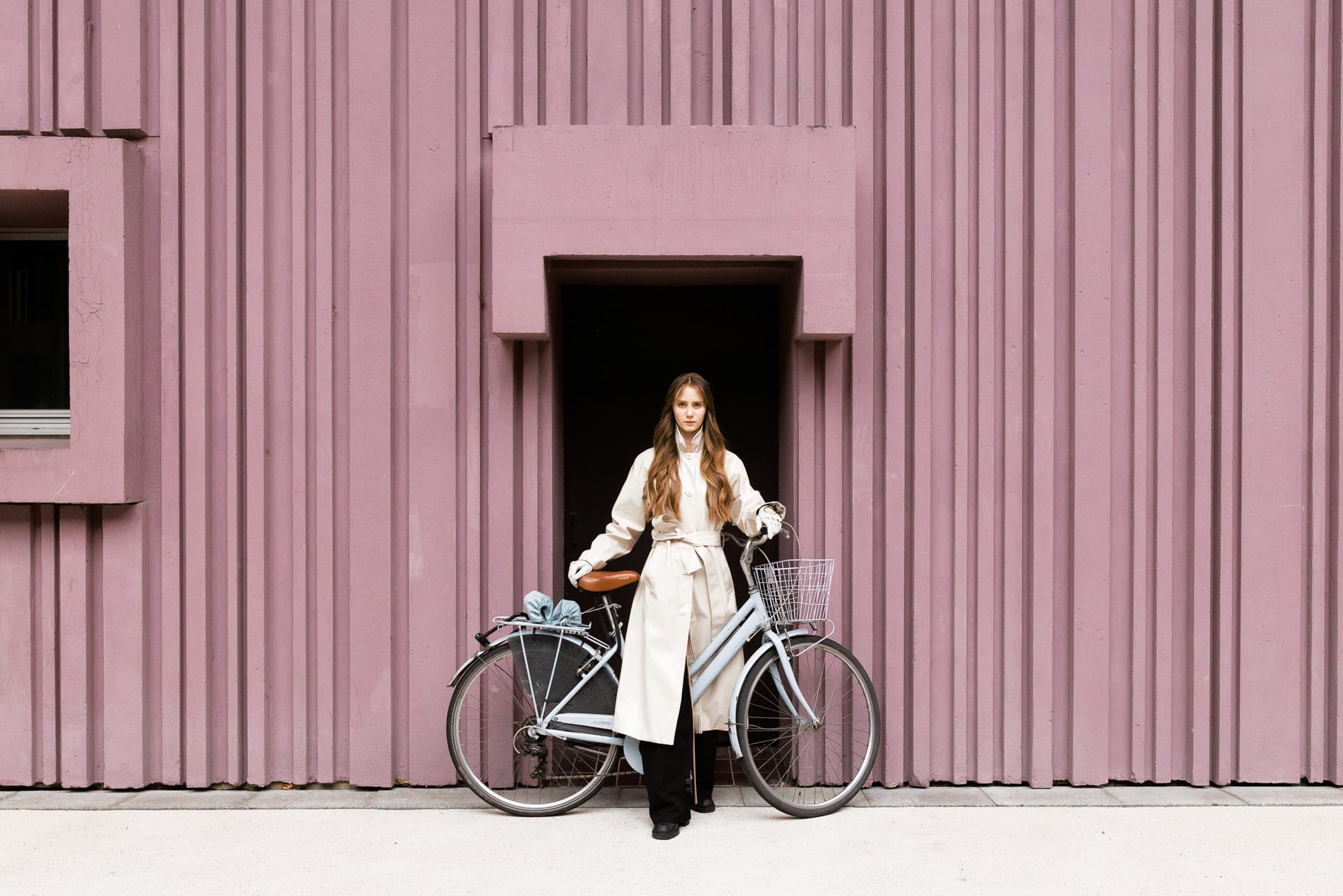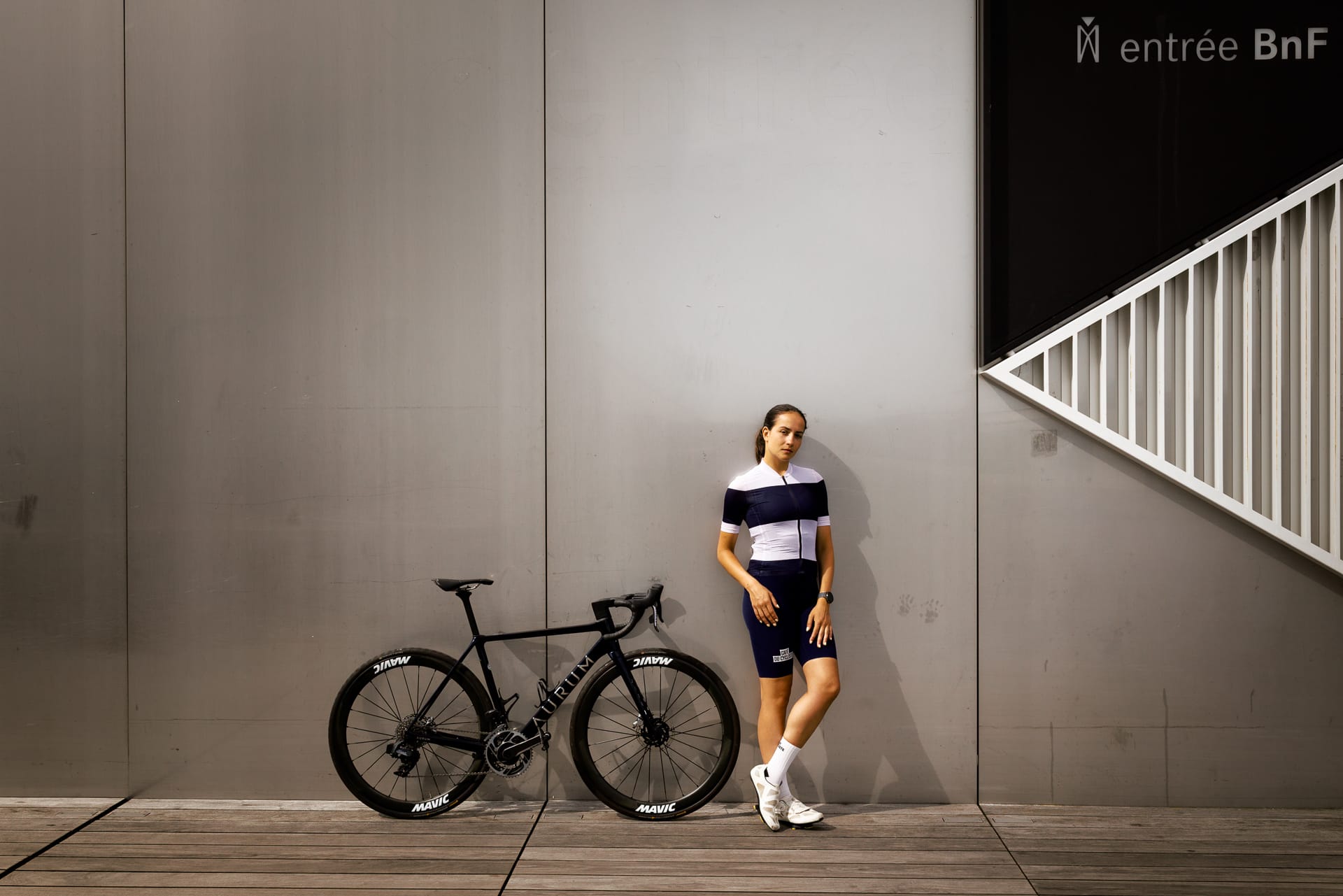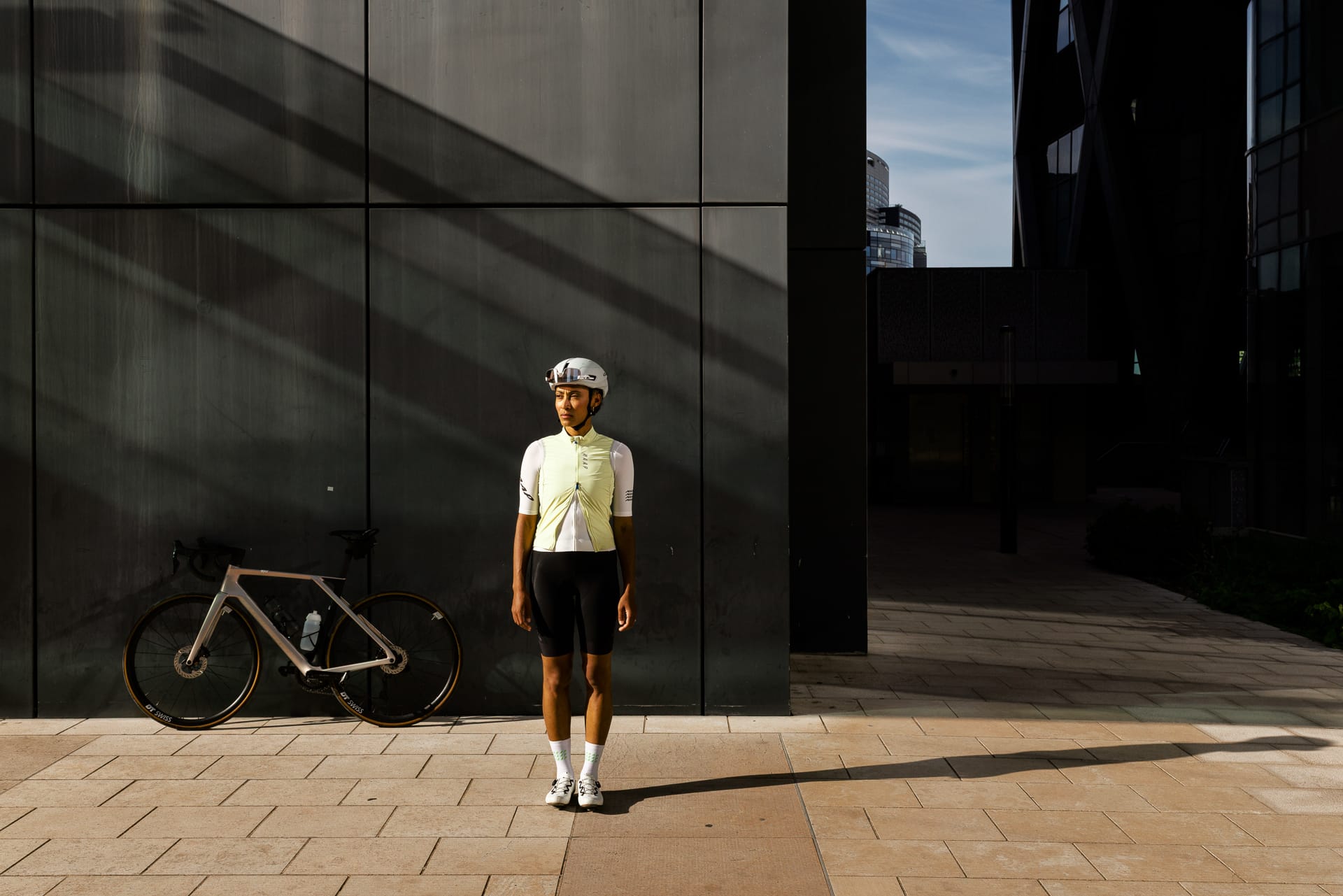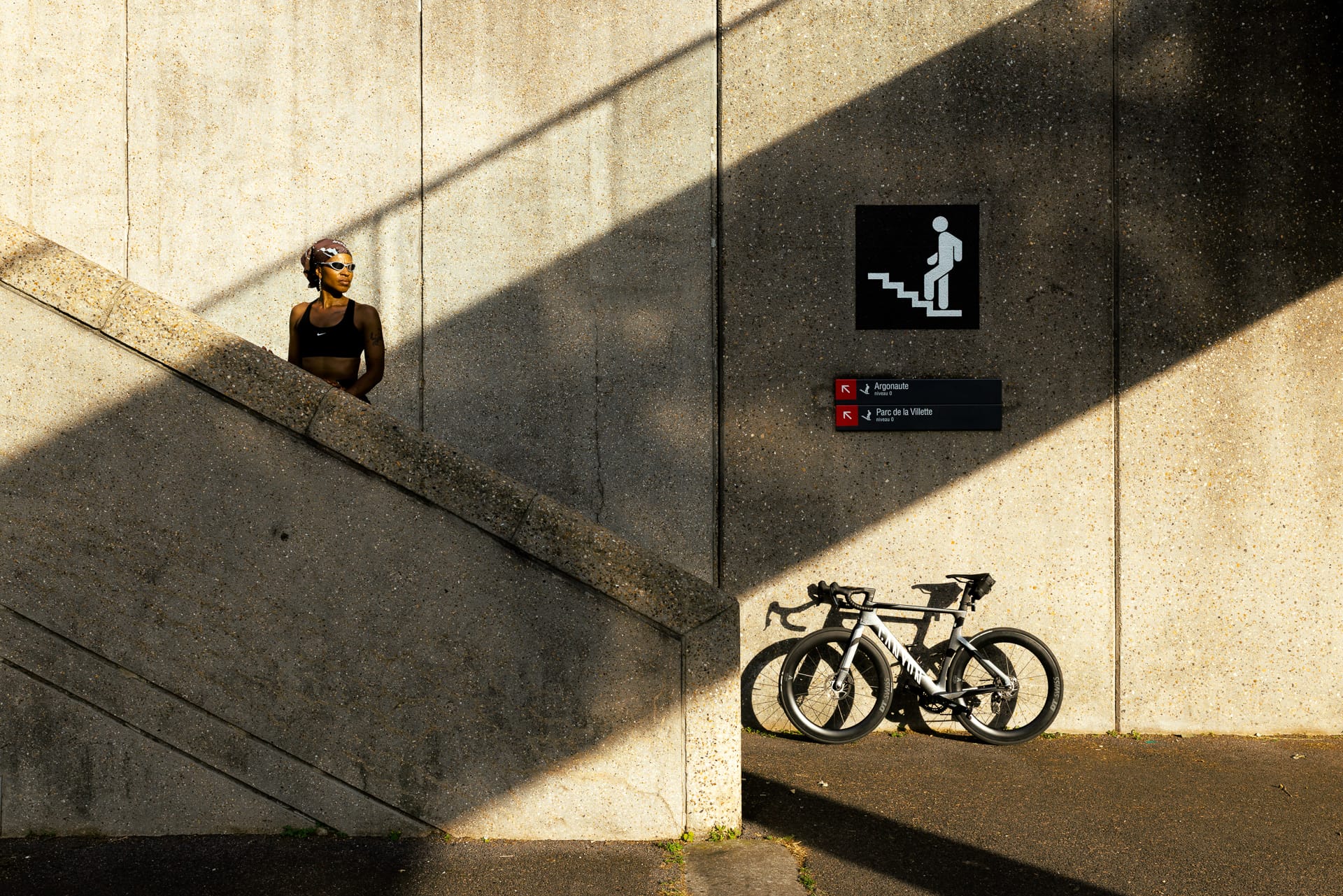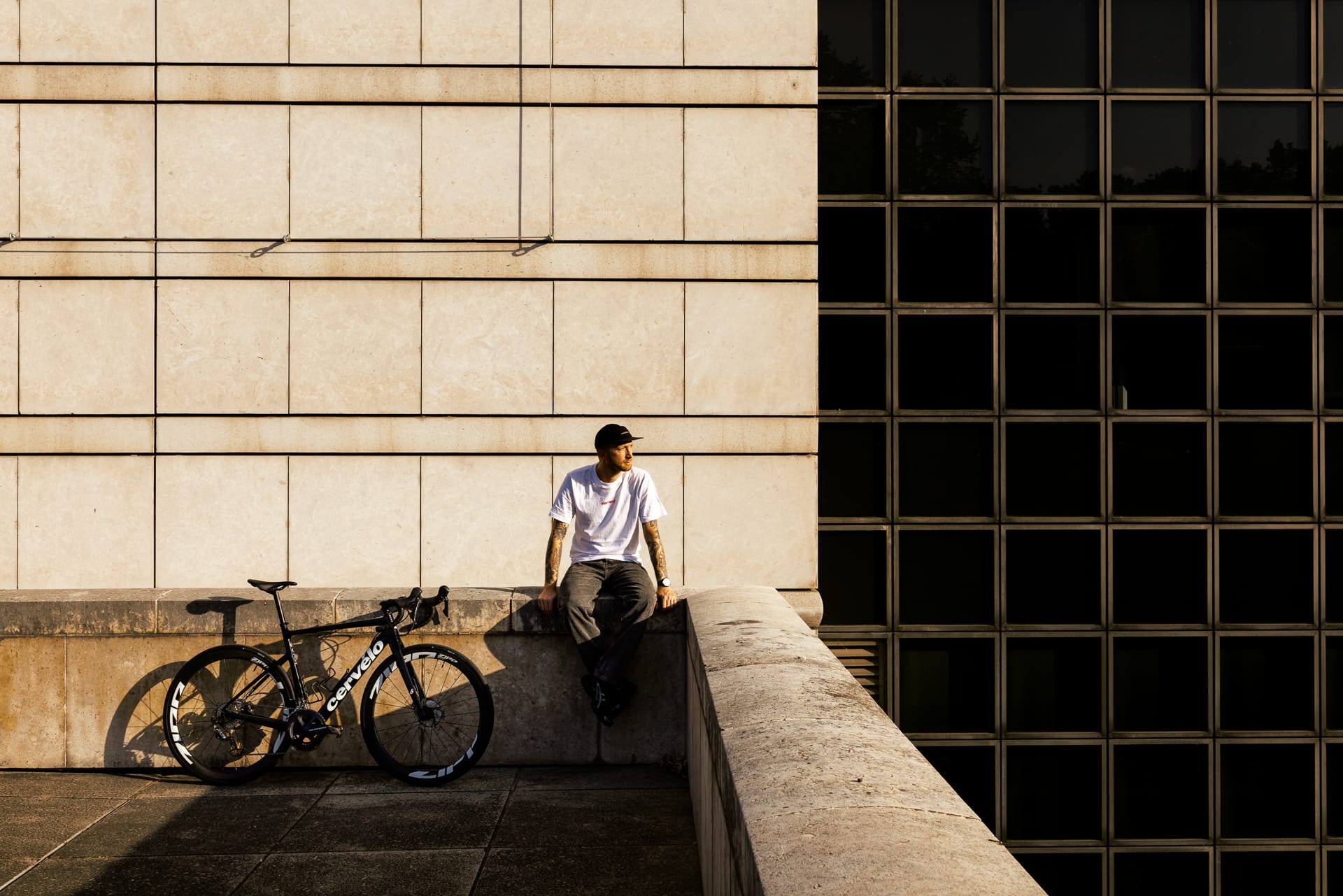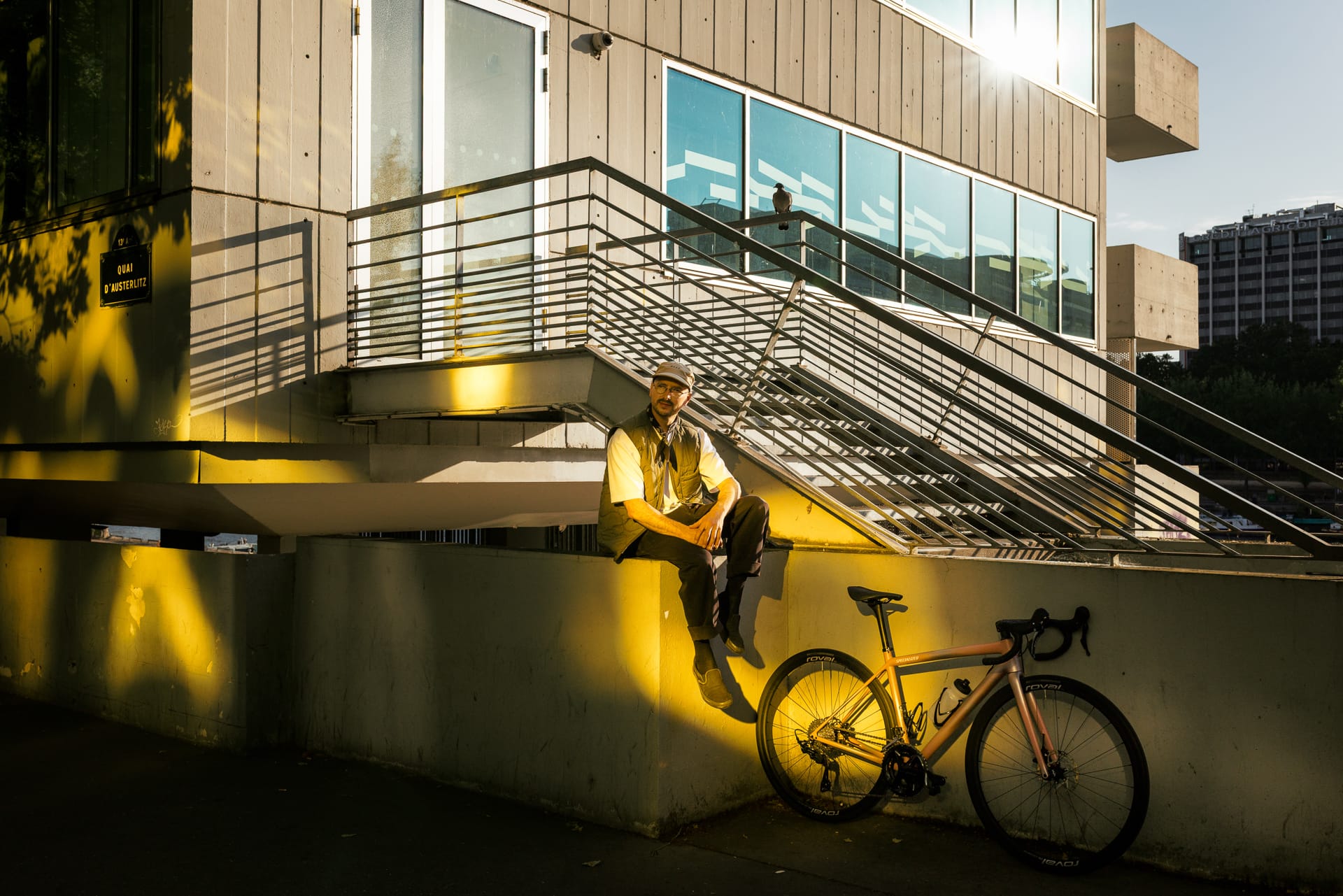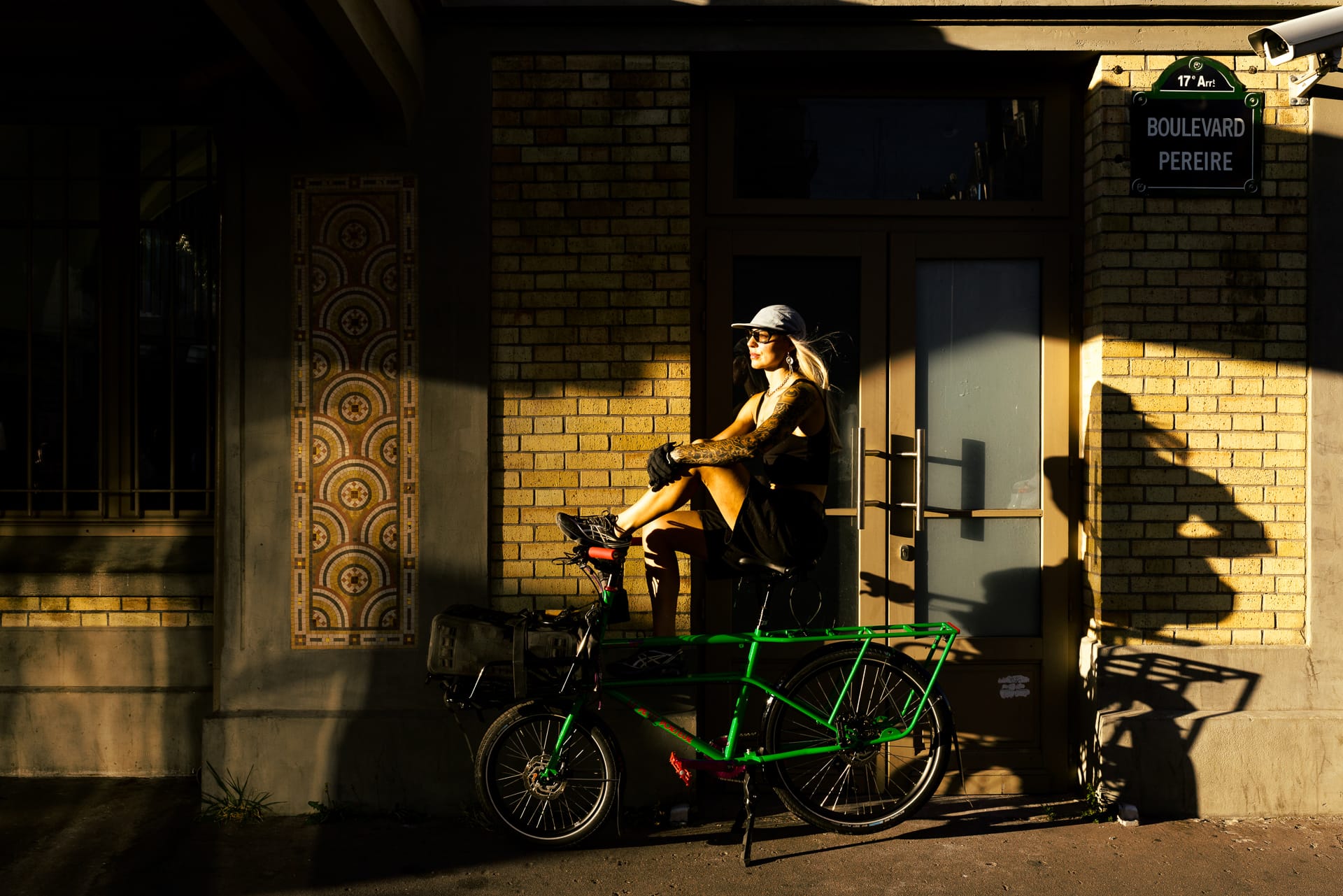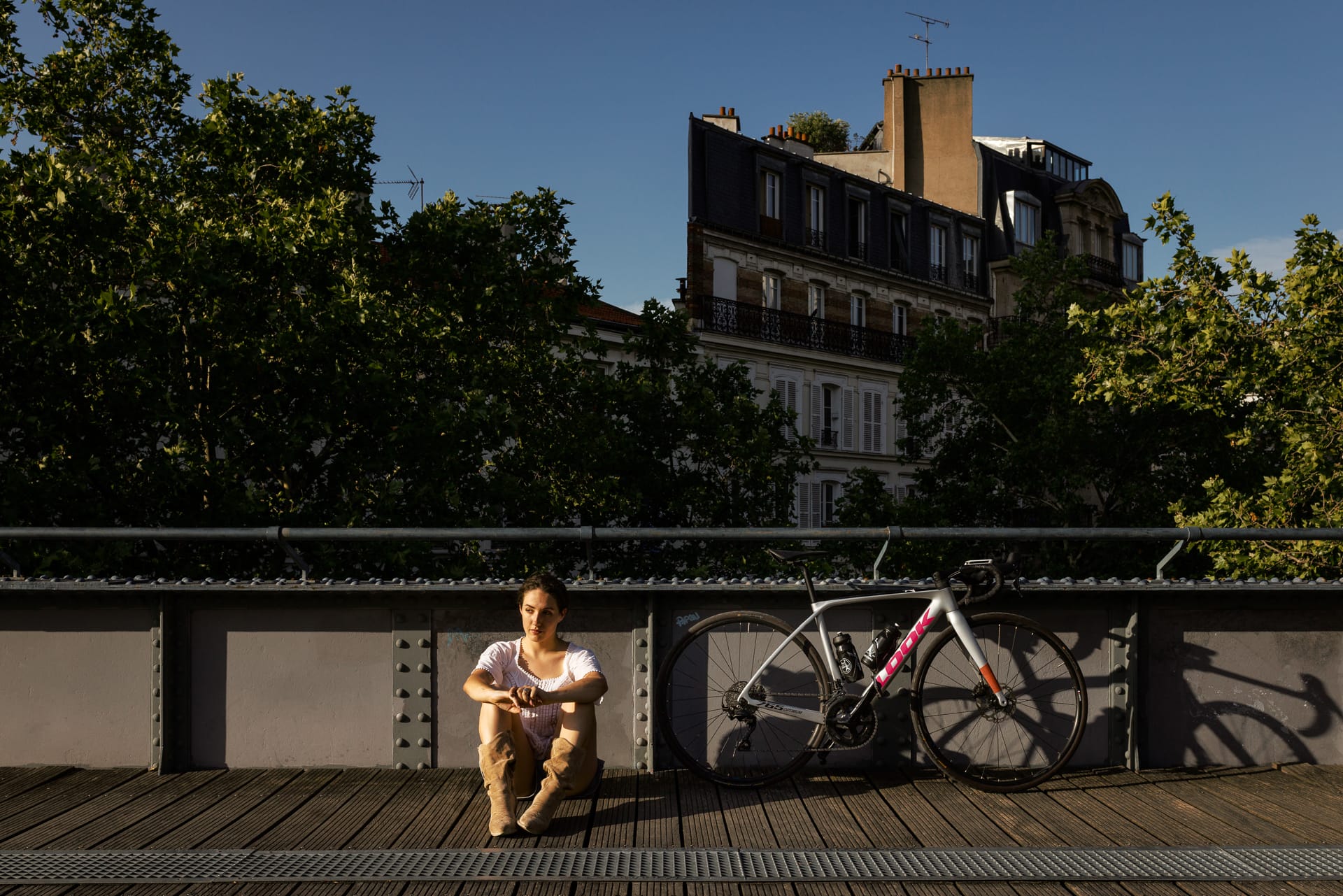
There is a particular sensation I chase when I ride through Paris by bicycle, early in the morning. It is not the thrill of speed nor the satisfaction of arrival. It is something more subdued: the feeling of becoming invisible, of slipping between the folds of a city that has not yet fully woken, when the light falls at an angle no one has yet seen.
I lose my way on purpose. I let the city happen to me the way you let a piece of music happen, without needing to know its title.
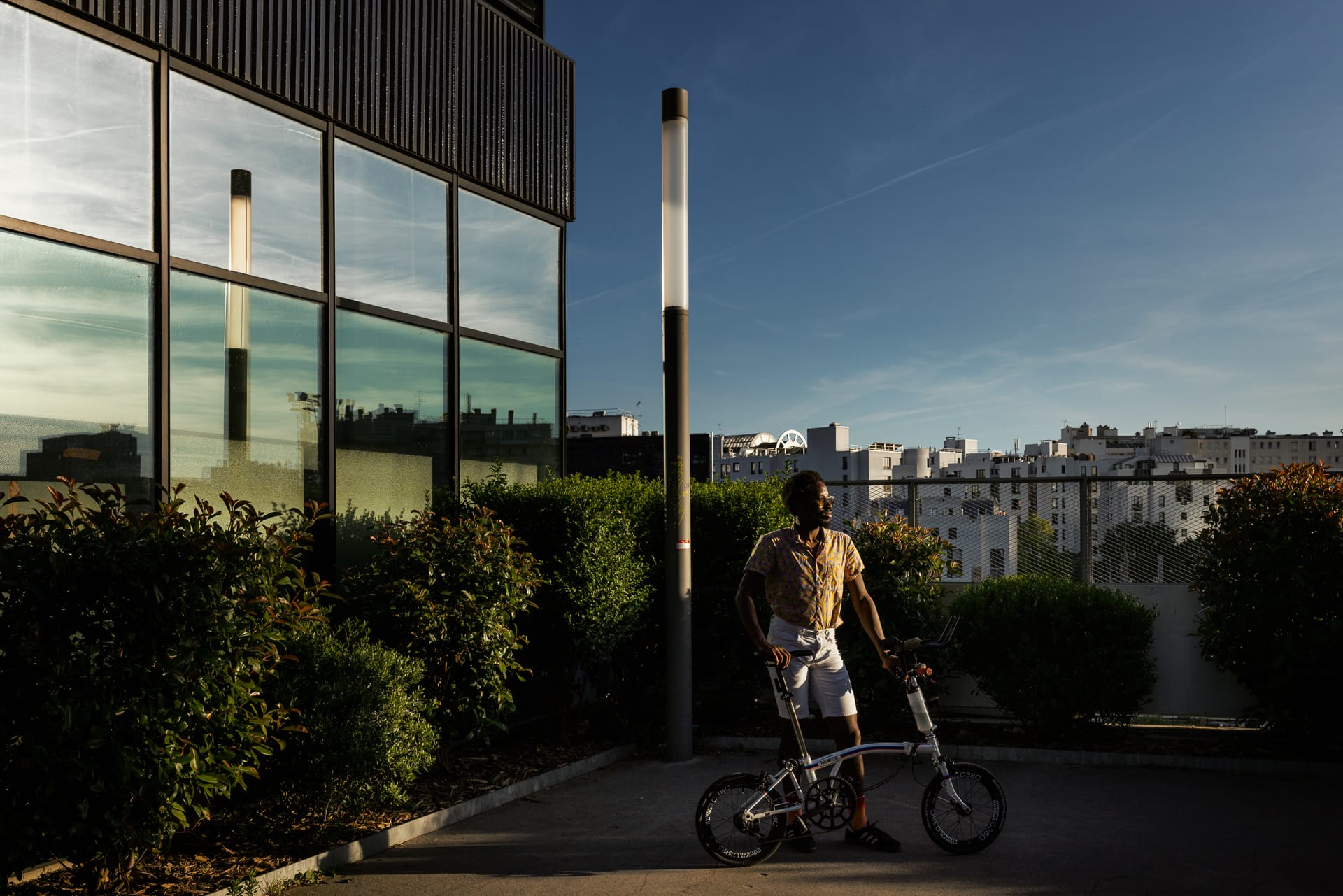
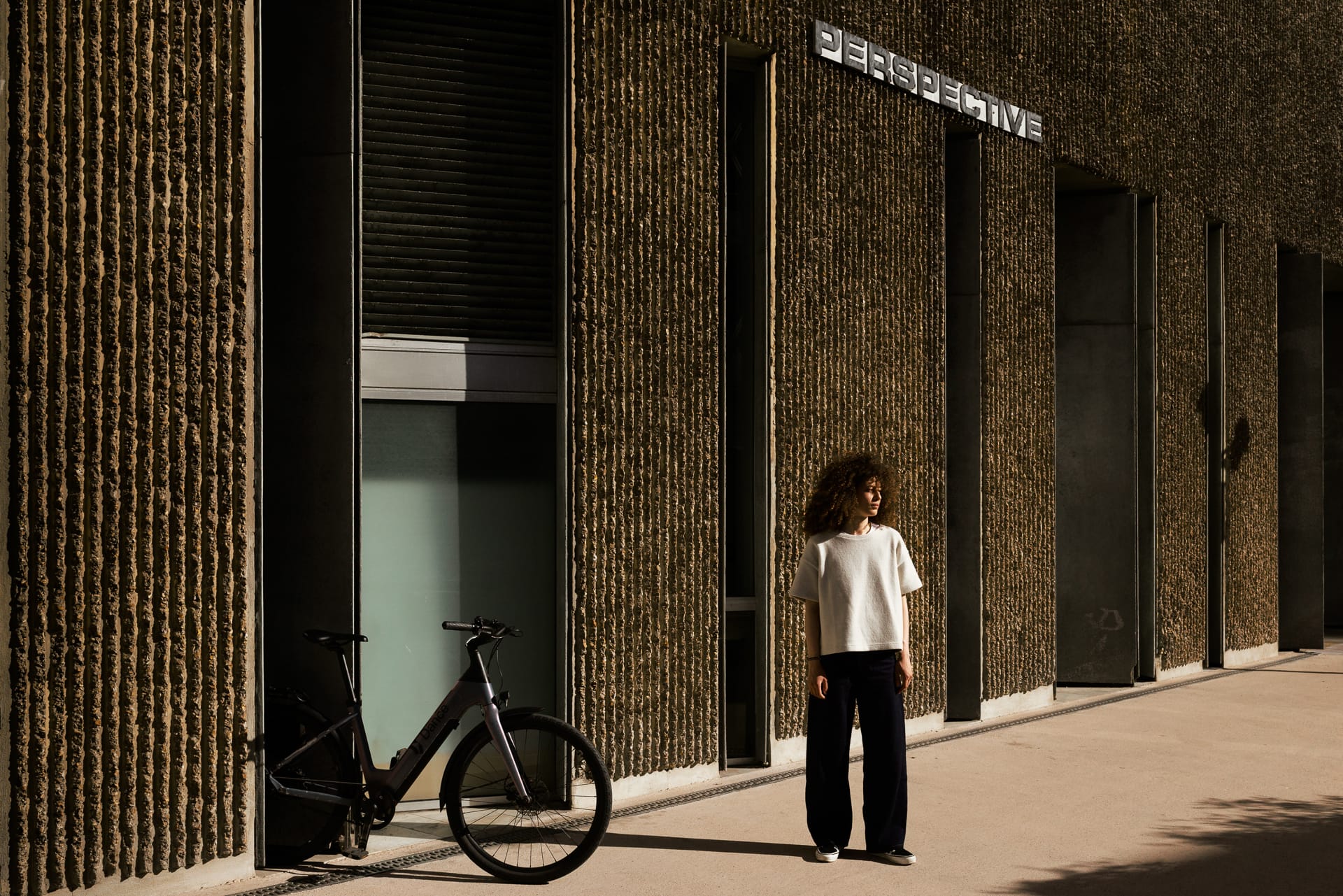
Portraits à vélo, presented by the Ville de Paris, was born from this practice of deliberate not-knowing. These are portraits, of men and women with their bicycles, standing still in the city. The cyclist becomes a unit of measurement, a living reference point against which the city reveals its scale, its weight, its silence. The architecture presses from above, the street stretches out, the light falls with a particular gravity, and the person with their bicycle simply is there, giving the space its proportion and its meaning.
These are not portraits in any conventional sense. The city enters the frame as part of the body, part of the story. I do not name the places, because I believe that looking, truly looking, requires a small act of forgetting. Before you remember where you are, you must first allow yourself to simply be there. What emerges is not the Paris of guidebooks. It is a Paris made of peripheral vision, of half-glimpsed geometries.
The bicycle is not incidental. It is the instrument through which my subjects inhabit the city. Pedalling does not take you away from the city; it pushes you deeper into it. And perhaps that is all I hope to offer with these photographs: not a portrait of Paris, but a portrait of the act of paying attention. A small reminder that a city does not belong to its monuments. It belongs to those who cross it slowly, who stop, who notice the ordinary, who let the light change the way they think.